Background
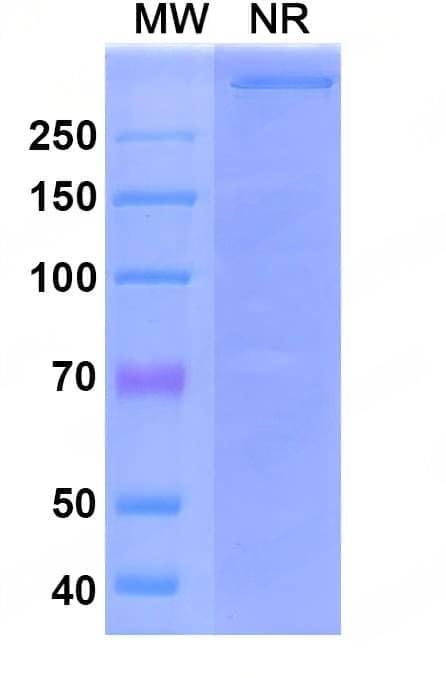
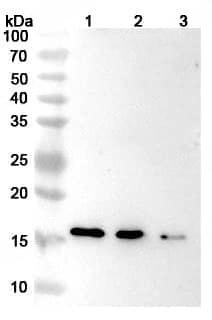
Emapalumab (NI-0501) is a human monoclonal IgG1 antibody that noncompetitively inhibits IFN-γ. Emapalumab binds with high affinity (Kd= 1.4 pM) to both free IFN-γ as well as IFN-γ bound to its receptor. Emapalumab can be used in research of hemophagocytic lymphohistiocytosis (HLH).• Interferon-γ induces tumor resistance to anti-PD-1 immunotherapy by promoting YAP phase separation., PMID:33606996• Dysregulation in IFN-γ signaling and response: the barricade to tumor immunotherapy., PMID:37275859• IFN-γ drives inflammatory bowel disease pathogenesis through VE-cadherin-directed vascular barrier disruption., PMID:31566580• IFN-γContributes to the Immune Mechanisms of Hypertension., PMID:36591357• Liver type 1 innate lymphoid cells develop locally via an interferon-γ-dependent loop., PMID:33766856• Parasitic helminths induce fetal-like reversion in the intestinal stem cell niche., PMID:29950724• IRAK1-regulated IFN-γ signaling induces MDSC to facilitate immune evasion in FGFR1-driven hematological malignancies., PMID:34906138• Interferon-gamma release assay performance in northeastern Brazil: influence of the IFNG+874 A>T polymorphism., PMID:29787713• Restraint of IFN-γ expression through a distal silencer CNS-28 for tissue homeostasis., PMID:37040761• MUC1-C integrates activation of the IFN-γ pathway with suppression of the tumor immune microenvironment in triple-negative breast cancer., PMID:33495298


 抗体
抗体 试剂盒
试剂盒 多肽
多肽 蛋白
蛋白 组织芯片
组织芯片

 定制服务咨询